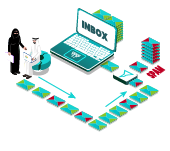

Email Spam Filter Saudi Arabia: The Complete Technical Guide to Safer Inbox Protection, Better Email Trust, and Stronger Business Communication
Email remains one of the most important communication channels in business, but it is also one of the noisiest and most exploited. Every day, companies receive messages that waste time, create confusion, increase risk, or directly attempt fraud. Some of these messages are merely annoying. Others are dangerous. Spam, phishing, impersonation attempts, malicious attachments, fake invoices, suspicious links, misleading notifications, and high volume junk mail all put pressure on the business communication environment. This is why email spam filtering matters so much. It helps protect the inbox as a business system, not just as a mailbox.
In Saudi Arabia, where email remains central to quotations, support, account communication, procurement, vendor coordination, finance handling, management approvals, and customer service, inbox quality has a direct effect on operational quality. If the inbox is noisy, teams become slower. If junk and suspicious messages are mixed too closely with legitimate business communication, mistakes become more likely. If staff cannot trust what arrives, they either become too cautious and slow, or not cautious enough and vulnerable. Both outcomes hurt the business.
This is why email spam filtering should not be understood only as a convenience feature. It is a communication protection layer. A good filter helps the company reduce distraction, improve safety, support productivity, and create a cleaner environment for important messages to be recognized and handled properly. The goal is not only to block nuisance mail. The goal is to improve the reliability of the inbox as a place where real business communication happens.
That reliability has become more important over time because modern threats no longer look obviously suspicious all the time. Many dangerous emails are written in polished language, use realistic branding, imitate vendors or internal roles, and target ordinary processes such as invoices, support requests, delivery notices, or password resets. The inbox therefore needs more than basic junk blocking. It needs filtering capable of helping the business separate what deserves attention from what deserves caution or rejection.
For businesses in Saudi Arabia, this matters across all sizes and sectors. A small company may have fewer mailboxes but still face real phishing risk. A mid sized service company may depend on high email volume across sales, support, and operations. An enterprise team may need stronger filtering because inboxes support many departments and higher communication complexity. In each case, spam filtering becomes part of how the company protects daily workflow.
Email spam filtering also has a broader trust function. When the inbox is cleaner, staff can work with more confidence. Legitimate messages are easier to notice. Customer support quality improves because real requests are less likely to be buried in junk. Finance teams can evaluate payment related messages with stronger controls. Leadership can communicate with less confusion. The business gains not only protection from bad email, but also a calmer and more effective communication environment.
This guide explains email spam filtering from that practical business perspective. It explores why spam filtering matters beyond junk reduction, how poor inbox quality affects business performance, why phishing and impersonation create serious email risk, how filtering helps teams work more safely, when businesses should upgrade their email protection, and why Saudi companies should increasingly treat spam filtering as a core part of professional email infrastructure.
The central idea is simple: if the inbox is one of the most important places where business happens, then protecting it properly is not optional.
Why spam is more than inbox clutter
Many people use the word spam to mean unwanted email generally, but in business terms spam is more than clutter. It is a drag on attention, a drain on time, a source of confusion, and often the outer layer of more serious risk. A noisy inbox does not only annoy users. It weakens the quality of communication by forcing teams to spend more effort sorting, checking, and second guessing what arrives.
This matters because business communication depends on focus. If staff are constantly filtering mentally through junk messages, they become less efficient and more likely to miss something important. A supplier message may be buried under low value bulk mail. A support request may be delayed because the inbox is crowded. A suspicious email may slip through because the user is tired of sorting through too much irrelevant noise. These are not rare outcomes. They are routine consequences of poor inbox quality.
For Saudi businesses, where email often supports high frequency formal communication, spam quickly becomes more than a nuisance. A sales team may lose pace. A support desk may become slower. An administrative inbox may become harder to govern. Leadership may become more vulnerable to deceptive messages simply because the volume of low trust mail has normalized too much caution fatigue. That is why spam filtering should be treated as a productivity and safety tool at the same time.
A stronger email filter improves this environment by making real business mail easier to recognize and easier to respond to. The company gets time back, but it also gets confidence back. The inbox starts feeling less chaotic and more useful, which is exactly what a serious business communication channel should feel like.
Why phishing is one of the biggest inbox risks
Spam filtering matters even more when the business understands that many harmful emails are not random junk. They are targeted attempts to trick recipients into clicking, replying, approving, paying, downloading, or disclosing information. This is what makes phishing one of the most serious inbox risks today. It uses email as a vehicle for deception, and it often succeeds not because recipients are careless, but because the messages are designed to look credible.
A phishing email may pretend to be a bank update, a customer request, a support ticket, a courier notification, a billing alert, a vendor message, or even an internal leadership instruction. The message may be polished, urgent, and plausible. That is why businesses should not rely only on user intuition. The inbox itself needs stronger filtering so that many dangerous messages are stopped or downgraded before they become a human judgment test.
For companies in Saudi Arabia, this is especially relevant because many businesses handle invoices, approvals, quotes, service requests, and urgent operational communication by email every day. Attackers know this. They imitate realistic workflows because realistic workflows create better chances of success. A message that looks like it belongs to normal business life is much more dangerous than obvious junk.
A professional spam filter helps reduce this exposure. It improves the chance that deceptive messages are identified, quarantined, flagged, or separated before users treat them like ordinary correspondence. This does not replace staff awareness, but it gives staff a much better starting point. That alone can prevent many avoidable mistakes.
Why business inboxes need a different standard from personal inboxes
A personal email account can often survive moderate clutter and occasional spam because the consequences are usually smaller. A business inbox is different. It carries customer requests, financial communication, internal approvals, supplier discussions, hiring messages, account actions, and formal records of interaction. The cost of inbox disorder is therefore much higher. This is why business spam filtering should be held to a higher standard than casual personal mailbox filtering.
In a business context, one bad message can waste money, trigger a false payment, slow a support response, disrupt procurement, confuse internal teams, or damage trust with a customer. Even one real message buried under too much spam can create unnecessary delay. That makes filtering quality a business issue, not just an IT preference.
For Saudi businesses, this distinction matters strongly because many sectors still depend on email as an official or semi official business channel. A company cannot treat the same inbox that receives purchase orders, quotations, legal discussion, and customer support traffic as though it were just another casual personal mailbox. It needs stronger protection and better control.
This is why professional filtering belongs inside the same strategic category as professional email hosting. The company should not only ask whether it has inboxes. It should ask whether those inboxes are protected well enough to support real work. When the answer is no, stronger spam filtering becomes an obvious next step.
The relationship between inbox quality and team productivity
Productivity is often discussed in terms of staffing, software, and workflow, but inbox quality has a major influence too. If employees start each day sorting through junk, deleting suspicious mail, checking whether certain messages are real, and recovering from unnecessary noise, the business loses productive capacity before real work even begins. This loss often remains invisible because it is spread across many small interruptions.
A cleaner inbox improves productivity because it reduces those interruptions. Staff can focus on relevant messages sooner. Department inboxes become easier to manage. Shared addresses become more usable. Support workflows become smoother. Finance and procurement teams spend less time clearing clutter before handling real communication. Over time, this creates a noticeably calmer and more effective work environment.
For businesses in Saudi Arabia with busy customer support, administrative, finance, or sales inboxes, this productivity gain can be substantial. The company may not need to hire more people if the existing team can simply work through email with less noise and less risk. Better filtering supports that outcome by making communication more manageable.
This is one reason spam filtering should be viewed partly as a time saving tool. The value is not only in what gets blocked, but in how much more usable the inbox becomes for the people doing real business work every day.
How poor filtering creates decision fatigue
Decision fatigue is one of the hidden costs of a weak email environment. When employees are repeatedly forced to judge whether a message is legitimate, suspicious, irrelevant, or dangerous, they spend mental energy on sorting rather than on acting. Over time, this can reduce alertness and consistency. People become either too trusting or too skeptical. Neither outcome is good.
A strong spam filter helps reduce decision fatigue by removing or isolating many low trust messages before they demand staff attention. This improves the signal to noise ratio in the inbox. Legitimate messages become easier to handle, and the user’s attention can be reserved for the communications that truly require evaluation.
For Saudi businesses with busy shared inboxes or high message volume across multiple departments, this is particularly useful. Teams working in finance, support, sales, procurement, and operations often already handle enough decision pressure through normal business tasks. They should not also be forced to manually judge large volumes of suspicious or irrelevant email that stronger filtering could have handled first.
Reducing inbox decision fatigue therefore supports both productivity and safety. People make better choices when they are not overwhelmed by low quality input all day.
Why spam filtering supports customer service quality
Customer service depends partly on how quickly and accurately the team can identify real requests and respond appropriately. If spam and low value noise are mixed heavily into customer facing inboxes, response quality suffers. Support messages can be missed, delayed, or mishandled because the inbox itself is harder to work through cleanly. This is one of the strongest business reasons to invest in professional filtering.
A cleaner support inbox means agents can focus more clearly on real customer communication. They are less likely to overlook legitimate messages buried under junk. They can prioritize more effectively. They can work with greater confidence that the communication in front of them is worth attention. This improves not only speed, but consistency.
For Saudi companies whose support function relies heavily on email, this is especially important. Many customers still use email for detailed service requests, account follow ups, document sharing, and escalation. If those requests enter an inbox clogged with junk, the support experience becomes weaker before the support team even begins. Better filtering protects customer experience by protecting the inbox environment where support happens.
This means spam filtering should be considered part of service quality infrastructure, not only part of IT hygiene.
Email spam filtering and financial caution
Finance related inboxes are among the highest risk communication environments in any business. They receive invoices, payment requests, vendor correspondence, approvals, account statements, procurement notices, and internal finance discussion. These messages are also among the most attractive targets for fraud. This is why spam filtering matters especially in finance linked workflows.
A strong email filter helps reduce the chance that obvious or semi convincing fraudulent messages land in front of finance staff as ordinary mail. It can separate suspicious patterns, reduce junk volume, and support a cleaner environment in which genuine financial communication is easier to review with appropriate caution. This does not eliminate risk, but it makes financial inboxes less exposed to everyday manipulation attempts.
For Saudi businesses where finance processes are increasingly digital and email driven, this can be highly valuable. Payment fraud and invoice related deception often begin through email because email is trusted and routine. A stronger filter helps protect that routine from being exploited too easily.
This is also one reason spam filtering naturally complements wider communication security measures. Finance teams need both awareness and better protection. Filtering provides one of the most practical first lines of defense.
Why a spam filter should fit the business environment
Not all businesses face the same email pattern. A small local service provider, an eCommerce business, a healthcare practice, a managed service provider, an enterprise support team, and a procurement heavy industrial business may all use email very differently. That means the spam filtering environment should fit the business reality rather than being treated as a one size fits all checkbox.
A company with heavy customer support traffic may care deeply about not missing legitimate inquiries. A business with high financial message volume may prioritize fraud reduction. A professional services firm may care about filtering that protects executive and client trust without disrupting formal communication too aggressively. The right filtering approach depends on what kinds of messages matter most and what kinds of threats are most disruptive.
For Saudi businesses, this fit is especially important because market sectors often have very different communication patterns. The stronger the alignment between filtering strategy and actual business use, the more value the company gets. Good filtering should make the inbox safer without making legitimate communication harder than necessary.
This is one reason businesses should not choose spam filtering only by generic feature lists. They should think about how their teams actually use email and where the communication pain points are. The best solution is the one that improves real business email quality.
The connection between email hosting and spam filtering
Spam filtering works best when it is part of a broader professional email environment. A business with strong hosted email, a well managed domain, and clean communication structure is already in a better position than a company relying on weak mailbox arrangements. Filtering builds on that by improving the quality and safety of the mail that enters the system.
This is why spam filtering connects naturally with Email Hosting Saudi Arabia. Hosting gives the business branded mailboxes, better structure, stronger control, and a more professional communication base. Filtering adds another layer by helping protect those inboxes from junk, malicious mail, and deceptive content. Together they create a much stronger communication platform than either one would alone.
For Saudi businesses trying to raise their digital professionalism, this combination is especially useful. The company strengthens both the identity and the quality of its email environment. That improves trust internally and externally.
Conclusion of Email Spam Filter Saudi Arabia
Email spam filtering in Saudi Arabia matters because the inbox is too important to leave exposed to noise, fraud, and constant low trust interruption. Spam is not only clutter. It is a productivity drain, a decision fatigue problem, a customer service issue, and often a gateway to more serious email based threats. Professional filtering helps protect the inbox as a business environment where real work happens.
The deeper value of spam filtering lies in improving communication quality. It helps teams focus on legitimate messages, supports customer service, strengthens financial caution, reduces decision fatigue, and makes the overall email environment calmer and safer. For serious businesses, that makes spam filtering far more than a convenience tool. It becomes part of how communication is protected and made more reliable every day.
Email Spam Filter Saudi Arabia
Why spam filtering is really a trust control
A spam filter is often described as a tool that blocks junk mail, but for a serious business it does much more than that. It helps control the level of trust inside the inbox. Every message that reaches a team member creates a choice. Is this real, suspicious, urgent, irrelevant, or dangerous? If the inbox contains too much low trust material, people either become numb to risk or overly cautious with legitimate communication. Both outcomes are expensive. A stronger filter helps restore balance by reducing how often staff must make unnecessary trust decisions.
This matters because the inbox is one of the busiest places where business happens. Sales teams review leads, support teams handle requests, finance teams receive invoices, operations teams process updates, and leadership reviews important communication through email every day. If low quality messages are allowed to compete too closely with legitimate ones, the entire rhythm of work becomes less reliable. The problem is not only wasted time. It is degraded judgment.
For businesses in Saudi Arabia, where many commercial processes still rely heavily on email, this has direct operational value. A cleaner inbox means the company can trust its communication environment more confidently. Legitimate emails are easier to notice, suspicious ones are less likely to slip through unnoticed, and staff are less likely to suffer from caution fatigue. That makes spam filtering part of business trust control, not just part of inbox hygiene.
Why phishing filters must support human judgment, not replace it
Many companies make one of two mistakes with email risk. Either they expect staff to recognize everything dangerous on their own, or they assume the filter will handle everything automatically. Neither approach is strong enough by itself. Good spam filtering should support human judgment, not replace it. The filter should remove a large share of dangerous and irrelevant messages before they reach users, while still allowing teams to make informed decisions where careful review is needed.
This distinction matters because modern phishing is often designed to appear normal. It may imitate a courier update, a finance notice, a support request, or a customer reply. If users receive too many of these messages directly, they become overburdened. If users trust the filter too blindly, they may lower their own alertness. The best business outcome comes when filtering reduces exposure enough that staff can apply judgment more calmly and more accurately.
For Saudi businesses managing finance approvals, procurement threads, support mailboxes, and executive communication, this balanced model is especially valuable. The company needs fewer risky messages reaching teams, but it also needs a communication culture where important messages are still handled thoughtfully. Strong spam filtering creates that better starting point. It gives people a cleaner inbox in which human attention can be used where it matters most rather than wasted on obvious junk and repeated low quality deception.
How spam filtering protects sales performance
Sales teams are often measured by pipeline quality, response speed, follow up discipline, and conversion consistency. What is often overlooked is how much inbox noise can weaken all four. If sales inboxes are crowded with junk forms, deceptive leads, fake inquiries, malicious attachments, or irrelevant noise, real opportunities become harder to identify quickly. Spam filtering therefore supports sales performance not only by blocking risk, but by making real demand easier to see and easier to act on.
This is important because sales depends heavily on speed and attention. A delayed reply can weaken momentum. A real lead can be missed if buried under low value messages. A representative may spend too much time sorting the inbox instead of responding to qualified opportunities. Over time, weak filtering quietly erodes sales efficiency even when nobody calls it a filtering problem.
For businesses in Saudi Arabia that rely on email driven inquiries, quotation requests, partnership outreach, or B2B opportunity flow, this can be highly significant. Better filtering helps make the sales inbox feel more like a source of actual opportunity and less like a place where real business must be extracted from constant noise. That improves both responsiveness and morale. Teams perform better when the communication channel they depend on is cleaner and more trustworthy.
Why finance inboxes need stronger filtering standards
Finance inboxes deserve a stricter standard because the cost of one bad message can be much higher. These inboxes often receive invoices, purchase orders, approvals, payment confirmations, supplier statements, bank related messages, and account updates. Attackers know this and frequently imitate these exact patterns because they are believable and financially sensitive. A general level of spam filtering is helpful, but finance related communication often benefits most from stronger attention and cleaner filtering logic.
The reason is straightforward. A deceptive marketing email is annoying. A deceptive payment instruction can be dangerous. A fake invoice request can trigger loss or at minimum create confusion and delay. A suspicious attachment can put sensitive operations at risk. The more financially important the inbox, the more valuable it becomes to reduce the volume of risky messages before staff ever see them.
For Saudi businesses operating with active procurement, vendor payments, recurring supplier relationships, and formal financial workflows, this can be one of the strongest reasons to invest in better spam filtering. Finance teams should not spend large parts of their day manually sorting deceptive or irrelevant noise before reaching genuine business communication. Better filtering gives them a cleaner environment in which caution can be applied more intelligently and more consistently.
Spam filtering and the customer support experience
Support teams often feel the quality of the email environment more sharply than anyone else because they work where real customer traffic and real inbox noise collide. A support inbox may receive legitimate service requests, follow ups, customer attachments, escalation messages, system notifications, and account questions all day long. If spam and malicious noise enter that same space too heavily, the support experience begins to degrade. Customers wait longer. Threads become harder to prioritize. Staff attention gets fragmented.
A strong spam filter improves support by helping protect the support inbox from irrelevant and deceptive traffic. This matters because support quality is often judged through speed and clarity. Customers do not know that the team lost ten minutes sorting through junk before finding the real request. They only know whether the business replied well. Filtering helps make that better reply more likely by preserving cleaner working conditions.
For Saudi companies serving customers through email based support, this is especially useful. The support inbox is not merely another mailbox. It is a frontline service environment. A better spam filter improves that environment by reducing distraction, lowering risk, and making real customer communication easier to spot and handle. That has direct value for retention, customer satisfaction, and brand trust.
Why false confidence is dangerous in weak filtering environments
One of the less obvious risks of weak spam filtering is false confidence. Teams may believe that because they are accustomed to receiving suspicious mail, they are good at spotting everything harmful. In reality, attackers adapt quickly, and the more normal suspicious mail becomes, the more likely employees are to miss a well crafted message at the wrong moment. This is one reason stronger filtering matters. It reduces the normality of threat exposure and helps preserve sharper judgment for cases that truly require review.
If users are forced to inspect too many suspicious messages every day, caution becomes exhausting. Some employees will become dismissive. Others will become overcautious and slow. Both responses are harmful. Better filtering helps prevent that fatigue by reducing the number of weak, obvious, or repeated malicious attempts that ever reach the inbox. That means when something questionable does appear, the team can treat it with more attention.
For businesses in Saudi Arabia that depend on everyday email for formal work, this distinction is important. The goal is not only to stop bad email. It is to preserve the quality of human attention around email. Strong filtering helps create a safer and calmer environment where users can think more clearly instead of reacting to constant low trust noise.
Spam filtering as part of operational resilience
Operational resilience usually brings to mind backups, servers, networks, and business continuity planning, but email quality is part of resilience too. If key teams cannot rely on the inbox, work becomes less stable. Finance slows down. Support weakens. Sales loses pace. Leadership becomes more exposed to deception. Procurement takes longer. The communication layer begins to feel unreliable, and that affects the organization more widely than many people expect.
Spam filtering supports resilience because it helps keep one of the most important business channels cleaner and more dependable. The filter does not solve every communication problem, but it reduces a major source of daily disruption. That makes inbox based workflows easier to sustain under pressure and easier to trust during busy periods.
For Saudi businesses that operate in fast moving sectors or across several departments, this resilience value is very practical. The inbox is not a side issue. It is one of the systems through which the business actually runs. Protecting that system with stronger filtering improves not only security posture, but also day to day business continuity. Teams can work more smoothly when the inbox behaves like a managed business tool instead of a noisy and risky public channel.
Why filtering should match the company's communication patterns
A good spam filter should reflect how the company actually uses email. Not every business has the same message profile, the same threat exposure, or the same tolerance for false positives and inbox noise. A support heavy company, a procurement heavy company, an eCommerce operator, a professional services firm, and a hosting provider may all need slightly different filtering emphasis. This is why filtering quality depends partly on fit, not only on block counts.
For example, a support intensive organization may need especially careful handling to avoid losing legitimate customer requests. A finance intensive organization may prioritize stronger scrutiny around invoice related messages and impersonation patterns. A company with executive heavy email risk may want stronger controls around leadership communication. The better the filter aligns with real communication patterns, the more valuable it becomes.
For Saudi businesses, this is particularly important because communication culture differs widely by sector. Some companies are email heavy across all departments. Others use email mainly for formal interactions while relying on other channels for routine communication. The filtering approach should support the real communication model of the business rather than applying a generic idea of what inbox protection should look like.
That is why spam filtering should be chosen and managed as part of a communication strategy, not only as a technical purchase. The best filter is the one that improves how the business actually works.
The connection between spam filtering and advanced email trust
Spam filtering is one important layer, but it works best as part of a broader email trust model. Professional email hosting supports structure and brand identity. Signing certificates support sender authenticity. Advanced email security supports stronger protection and encryption where needed. Spam filtering helps keep dangerous and low value noise from reaching the inbox in the first place. These layers reinforce each other.
For Saudi companies building more serious communication environments, this layered model is increasingly important. A business using professional email hosting, stronger protection through, and trusted sender support through will gain even more value when spam filtering is also in place. Each layer improves a different part of the communication trust stack.
That is why spam filtering should not be treated as a narrow anti junk feature. It is a foundational layer that helps make the whole business email environment more usable, more trustworthy, and more secure.
Conclusion of Email Spam Filter Saudi Arabia
Email spam filtering in Saudi Arabia becomes more valuable as businesses recognize that inbox quality affects far more than convenience. It influences trust, productivity, financial caution, support responsiveness, sales efficiency, staff attention, and operational resilience. Stronger filtering helps teams work in a cleaner, safer environment where real communication is easier to identify and risky noise is less likely to interfere with important work.
The deeper value of spam filtering lies in protecting the inbox as a serious business system. When that system is cleaner and more reliable, every department that depends on email performs better. That is why better filtering is not just an anti spam purchase. It is an investment in communication quality.
Email Spam Filter Saudi Arabia
Why cleaner inboxes improve management visibility
A noisy inbox does not only affect frontline teams. It affects management visibility as well. Leaders often rely on email for approvals, escalations, summaries, finance updates, vendor coordination, and internal reporting. When their inboxes are crowded with junk, low value noise, suspicious messages, and avoidable distractions, the quality of decision making can suffer. Important communication becomes harder to identify quickly, and the inbox starts competing with leadership attention instead of supporting it.
This matters because management attention is limited and expensive. Every unnecessary message that reaches a decision maker consumes some part of that attention. Over time, poor filtering creates a hidden tax on leadership focus. It slows response, weakens clarity, and increases the risk that urgent or important communication is missed or delayed.
For businesses in Saudi Arabia where many decisions still move through formal email discussion, this is especially relevant. The inbox is often a live operational dashboard for leadership. It should not feel like a noisy public street. A stronger spam filter helps protect executive attention by reducing the amount of irrelevant, deceptive, or low trust mail that reaches the people responsible for high value decisions.
A cleaner leadership inbox supports faster review, clearer prioritization, and better overall communication quality. That is why spam filtering can create value at the management level, not only at the support or IT level.
Spam filtering and vendor relationship quality
Vendors and suppliers are often part of the most important communication loops in a business. Purchase orders, quotations, invoices, delivery schedules, scope clarifications, payment queries, and support tickets may all move through email. If those messages compete with too much spam, both speed and accuracy suffer. This is one reason spam filtering helps improve vendor relationship quality.
A cleaner inbox makes it easier for teams to recognize legitimate supplier communication quickly and respond appropriately. It also reduces the risk that fake vendor messages blend into normal operational traffic too easily. That matters because vendor impersonation and invoice style deception are among the most damaging forms of business email abuse. A stronger spam filter helps create a better first line of separation between real vendor communication and fraudulent noise pretending to be part of normal workflow.
For Saudi businesses working with many suppliers, subcontractors, technology partners, logistics providers, and service vendors, this can be highly valuable. The more active the vendor ecosystem, the more important it becomes to keep the communication environment clean and trustworthy. Better filtering supports that by making legitimate vendor messages easier to detect and suspicious ones easier to isolate.
This improves not only safety, but also the general speed and confidence of business operations. Communication with vendors becomes smoother when teams are not constantly second guessing the inbox.
Why spam filtering affects response discipline
Response discipline is easier to maintain when the inbox feels manageable. Teams are more likely to reply consistently, follow up promptly, and work through messages methodically when the environment is not overloaded with junk and suspicious clutter. By contrast, when the inbox feels chaotic, response quality often becomes inconsistent. People delay sorting. They postpone review. They scan less carefully. Important communication may be seen later than it should be.
This is why spam filtering has a strong indirect effect on response discipline. It makes the inbox a more usable working environment, which helps teams maintain better communication habits. They can review what matters sooner, act with more confidence, and preserve momentum more easily. Inboxes that feel cleaner are also psychologically easier to work through, which reduces avoidance behavior.
For companies in Saudi Arabia that depend on timely customer communication, support workflows, sales follow ups, and formal email approvals, this matters a great deal. The business often measures responsiveness as a people issue, but the inbox environment is part of the reason people respond well or poorly. Better filtering creates conditions where good habits are easier to sustain.
A stronger spam filter therefore supports not only threat reduction, but also better everyday communication behavior across departments.
Spam filtering and the risk of missed opportunities
Most businesses think about email filtering mainly in terms of blocking bad messages. But weak filtering can also cause missed opportunities. If the inbox is noisy enough, real leads, real customer requests, real partnership inquiries, and real sales signals may get less attention than they deserve. They may not be fully missed, but even short delays can reduce commercial momentum. In competitive markets, that matters.
Opportunity loss happens because inbox noise changes attention patterns. Staff skim too quickly. They postpone review. Shared inboxes become harder to clear. Important subjects look less distinctive because too many fake ones follow similar patterns. Over time, the business becomes slower at recognizing value in the inbox because too much clutter competes for the same attention space.
For Saudi businesses using email as a major channel for leads, quotes, vendor introductions, support conversions, or account expansion, this is a serious issue. A better filter helps protect opportunity by making the inbox more readable and more trustworthy. Legitimate business communication is easier to identify and less likely to be diluted by repeated junk and deceptive noise.
This is one of the strongest reasons spam filtering should be treated as a commercial performance tool as well as a security tool. It protects not only against what should be blocked, but also the visibility of what should be acted on.
Why spam filtering improves confidence in shared inboxes
Shared inboxes are among the most useful and most vulnerable parts of business communication. They support teamwork, continuity, and role based communication, but they also accumulate noise quickly because several people rely on them and many kinds of messages arrive there. If spam filtering is weak, shared inboxes become harder to trust and harder to manage. That can create confusion, duplicate effort, and missed messages.
A strong spam filter improves shared inbox confidence because it keeps the environment cleaner for the whole team. Support teams can focus on real requests. Sales teams can review real inquiries. Finance teams can process actual account messages without sorting through as much deception and clutter. This makes shared communication easier to coordinate and easier to govern.
For Saudi businesses using support, sales, procurement, info, finance, or operations inboxes, this can be extremely valuable. Shared inboxes often sit at the center of important workflows. The more usable they are, the better the organization performs. Better filtering strengthens that usability by making the inbox more predictable and less distracting.
This is another reason spam filtering belongs inside the company’s communication infrastructure strategy. Shared inboxes are not side tools. They are often essential business systems.
Spam filtering and a stronger first line of defense
Every serious security model relies on layered protection. Not every message should reach the user and rely entirely on human caution to be handled safely. A stronger email spam filter acts as one of the earliest control points in that layered model. It reduces exposure before the message reaches the team, which makes every later decision easier and safer.
This matters because the inbox is one of the most frequent entry points for deception. Attackers know that email is trusted, routine, and often operationally urgent. If the company leaves too much of that risk at the user level, then the whole organization becomes more exposed to mistakes made under time pressure or distraction. A filter that removes many suspicious, malicious, and irrelevant messages before they reach staff lowers that exposure meaningfully.
For Saudi businesses building more mature digital operations, this first line of defense is practical and necessary. The company may also invest in stronger hosted email, advanced security, and better user awareness, but none of those remove the need to reduce dangerous email volume as early as possible. Spam filtering helps make the inbox safer before human judgment is even required.
That early reduction in risk has wide business value because it protects time, attention, trust, and workflow continuity all at once.
Why overreliance on manual inbox sorting is a mistake
Some teams become so used to sorting spam manually that they stop seeing the cost clearly. They accept inbox cleanup as just another part of the workday. This is a mistake because manual sorting does not scale well, does not use staff time wisely, and does not provide strong enough protection against more convincing threats. It also creates false normality around inbox clutter, which weakens communication standards over time.
Professional spam filtering helps the business stop relying too heavily on manual sorting. It allows people to spend more time on the communication that deserves judgment and less time on repetitive cleanup. This matters because staff time should be reserved for customers, sales, finance, support, and operations, not for deleting endless low trust mail that stronger filtering should have handled earlier.
For businesses in Saudi Arabia with lean teams or fast moving workloads, this efficiency gain can be substantial. The less time employees spend cleaning the inbox, the more time they have to move real work forward. Better filtering therefore creates practical operational leverage. It helps the business do more with the attention it already has.
Spam filtering and email based reputation protection
A company’s reputation is shaped partly by how it communicates and partly by how safe that communication environment feels. If employees are frequently exposed to deceptive messages that look similar to real customer mail, mistakes become more likely. If customers experience slower replies because inboxes are clogged, service quality weakens. If finance or leadership teams are repeatedly distracted by suspicious traffic, the organization becomes less stable in its communication behavior. All of this affects reputation indirectly.
A stronger spam filter helps protect business reputation by making email communication more controlled and more dependable. Legitimate messages are easier to prioritize. Fraud attempts are less likely to blend into normal operations. Teams can work more consistently. The business appears more responsive and more organized because the inbox itself is less compromised by noise.
For Saudi businesses where service quality, relationship management, and professionalism strongly affect growth, this is highly relevant. Reputation is not built only through branding and websites. It is also built through how the business handles routine communication day after day. Better filtering improves that daily communication baseline and therefore supports the wider brand.
Why spam filtering becomes more valuable as the business grows
Growth tends to increase email complexity faster than many companies expect. More customers, more suppliers, more employees, more shared inboxes, more departments, and more digital activity all create more incoming mail. At the same time, greater visibility often attracts more junk, more phishing attempts, and more opportunistic deception. This means that spam filtering usually becomes more valuable as the business grows, not less.
A small company may tolerate a mediocre inbox environment for a while, even though it still carries risk. A larger company feels the cost much more clearly because the scale of communication is higher. More staff are exposed. More inboxes are affected. More customer and vendor relationships depend on email quality. More decisions pass through email. As a result, stronger filtering stops being a useful upgrade and starts becoming a necessary part of operational maturity.
For Saudi businesses moving from small team operations to more structured organizational growth, this is especially important. Spam filtering should grow with the business. Waiting too long often means allowing clutter, risky habits, and inbox fatigue to spread before the company puts stronger protections in place. Earlier investment usually creates a cleaner growth path.
Spam filtering and the business case for calmer communication
One of the strongest arguments for better filtering is calm. A calmer communication environment is easier to manage, easier to trust, and easier to use for real work. Teams spend less time deleting junk. Shared inboxes become less stressful. Suspicious messages appear less often. Real communication stands out more clearly. The inbox feels like a business tool again instead of a constantly contested space.
Calm has real business value because it improves judgment and reduces friction. People work better when their environment is less noisy and less risky. Support feels more manageable. Finance feels safer. Sales feels cleaner. Leadership sees more clearly. These are not abstract gains. They affect how the organization performs every day.
For businesses in Saudi Arabia dealing with formal, high volume, or high trust communication, this calmer environment can be one of the most valuable outcomes of stronger spam filtering. It helps the company operate with more confidence and less unnecessary communication stress.
Conclusion of Email Spam Filter Saudi Arabia
Email spam filtering in Saudi Arabia becomes more valuable as companies realize that inbox quality affects leadership focus, vendor coordination, response discipline, shared inbox confidence, opportunity visibility, operational resilience, and brand reputation. Better filtering helps create a calmer and more controlled communication environment where real messages are easier to find, risky messages are less likely to interfere, and teams can work with greater confidence.
The deeper value of spam filtering lies in protecting the inbox as a place where decisions, customer service, finance, and daily operations all happen. When the inbox becomes cleaner, safer, and easier to trust, the whole business communicates better.
Email Spam Filter Saudi Arabia
Spam filtering and the real value of cleaner decision making
One of the strongest benefits of a better spam filter is not simply that fewer bad emails arrive. It is that better decisions become easier to make. When inboxes are cleaner, employees spend less time sorting noise and more time evaluating communication that actually deserves attention. This improves the quality of judgment across the business because the inbox becomes less chaotic and less mentally draining.
That matters in practical terms. A finance employee reviewing invoices can focus more clearly on genuine supplier messages. A support agent can identify real customer urgency more easily. A sales representative can respond to opportunities faster because fewer fake inquiries distract from real ones. A manager can review important updates without losing concentration to repeated junk. These improvements seem small one by one, but together they create a noticeably better communication environment.
For businesses in Saudi Arabia, where email often still carries quotations, approvals, account communication, service requests, and formal follow ups, this cleaner decision making has direct commercial value. The business becomes more responsive and more accurate because its people are spending less attention on noise. A stronger filter does not only remove bad email. It improves how the company uses its own attention.
This is one reason spam filtering should be seen as a business performance tool. Better filtering improves the quality of thought applied to inbox based work, and that often matters as much as the number of messages blocked.
Spam filtering and better coordination between people and systems
A healthy communication environment depends on good coordination between automated systems and human teams. Filters should stop obvious junk, isolate suspicious traffic, and reduce the amount of risky content that reaches users. People should then focus on reviewing the communication that genuinely requires business judgment. When this balance works well, the inbox becomes safer and more efficient.
Problems start when that balance is weak. If the system does too little, teams are overloaded with junk and forced into constant manual screening. If the system is poorly aligned with the business, legitimate messages may create unnecessary friction. A strong spam filtering setup should support the real communication patterns of the company so that people and systems reinforce each other rather than creating new obstacles.
For Saudi organizations with several departments, shared inboxes, role based addresses, and formal communication workflows, this coordination is especially important. The company should not force staff to act like human spam filters all day. Nor should it deploy controls that make ordinary business communication harder than necessary. Good filtering helps technology do its part so people can do theirs better.
This is another reason filtering should be treated strategically. It is not only a technical barrier. It is part of the overall design of how the business communicates.
Why email noise weakens internal trust
Many businesses think about spam as an external problem, but inbox noise also affects internal trust. If employees repeatedly see suspicious messages in normal inboxes, uncertainty increases. Staff begin questioning more of what they receive. That can be healthy in moderation, but if it becomes excessive, communication slows down. People hesitate too much, seek manual confirmation too often, or become unsure which messages are normal and which are not.
This internal trust issue becomes more serious when important business processes depend on email. If people feel the inbox is full of deception and clutter, they stop treating email as a stable communication channel. That weakens workflow quality. Messages that should move quickly become delayed. Teams compensate with extra calls, repeated forwarding, duplicate communication, or manual workarounds. All of that creates inefficiency.
For businesses in Saudi Arabia, this matters because many organizations still use email for formal internal coordination as well as external communication. A stronger spam filter helps preserve trust in email as a dependable business channel by reducing the volume of obvious junk and suspicious material that staff must face. The cleaner the inbox feels, the easier it is for internal teams to trust the communication environment appropriately.
That improves not only safety but also workflow confidence. People work better when the channel itself feels more reliable.
Spam filtering and better customer reply handling
Customer reply chains can become difficult to manage in weak inbox environments. A real customer response may arrive alongside spam, fake delivery notices, phishing attempts, and junk form messages. If support or sales staff must work through too much clutter, genuine replies can be delayed or overlooked. This is especially damaging in high value customer relationships where continuity and timing matter.
A stronger spam filter improves reply handling by making genuine customer threads easier to recognize and easier to keep moving. Staff can focus on the communication that belongs to real service and revenue processes rather than losing attention to noise. This supports better customer experience because reply chains feel smoother and more consistent.
For Saudi businesses that depend on long email threads for support, quotations, onboarding, service follow up, and account management, this can have significant value. The inbox becomes more capable of supporting relationship continuity when irrelevant traffic is reduced. That means the company is less likely to lose momentum or context in customer communication because of inbox clutter.
Better reply handling is one of the most practical ways spam filtering improves service quality without changing the service team itself. It simply protects the communication environment in which the team is already trying to do good work.
Why spam filtering helps protect role based identities
Role based addresses such as support, sales, accounts, hr, procurement, and info are essential for many businesses, but they are also attractive targets for spam, phishing, and high volume junk. Attackers and bulk senders often use these public addresses because they are easier to guess and more likely to receive regular business traffic. This means role based inboxes often need stronger filtering protection than personal addresses.
A good spam filter helps protect these role based identities by reducing the flood of irrelevant or deceptive mail that would otherwise make them harder to manage. That matters because role based inboxes are often shared across teams and connected to important business functions. If they become too noisy, service quality drops and communication ownership becomes less clear.
For Saudi businesses using role based inboxes for external communication, this is particularly important. These addresses often represent the company officially. They should feel reliable and manageable, not overloaded and risky. Stronger filtering makes it easier to preserve the usefulness of these identities as the business grows.
This also reinforces why spam filtering belongs within a wider business email strategy. Role based communication works better when hosted email, structure, and filtering all support one another.
Spam filtering and the reduction of avoidable human error
Human error becomes more likely when the inbox is overloaded. The more junk and suspicious mail people must review, the greater the chance that someone clicks too quickly, replies to the wrong thread, overlooks an important detail, or misjudges a deceptive message. A stronger spam filter reduces this risk by lowering the volume of bad decisions employees are asked to make every day.
This does not mean people stop needing awareness or caution. It means the environment becomes more supportive of good judgment. Users are less pressured, less distracted, and less likely to operate in a state of constant inbox fatigue. That improves safety in a very practical way.
For businesses in Saudi Arabia handling high message volumes or sensitive communication, this reduction in avoidable error can be extremely valuable. One mistaken click or one overlooked fake invoice can create outsized disruption. Better filtering lowers the probability that human attention is wasted or misapplied under unnecessary pressure.
That is why spam filtering should be seen as part of human risk reduction, not only as message reduction. It helps protect people from inbox conditions that make mistakes more likely.
Spam filtering as a support layer for business continuity
When businesses think about continuity, they often focus on servers, backups, applications, and networks. Those are critical, but continuity also depends on communication. If important teams cannot trust or efficiently use email, core processes slow down. Customer contact becomes less stable. Vendor coordination weakens. Finance delays increase. Internal approvals take longer. In that sense, inbox quality is part of operational continuity.
Spam filtering supports continuity by helping keep one of the company’s most used channels clean enough to remain dependable. The business can continue working through email with fewer interruptions from junk and deception. Shared inboxes remain more usable. Departments that depend on email can operate with more confidence even under high message volume.
For Saudi companies with customer heavy workflows, vendor heavy operations, or formal communication structures, this is highly practical. The inbox is often woven directly into daily operations. Protecting it with stronger filtering therefore protects part of the business’s ability to keep functioning normally.
This is one reason spam filtering should be considered alongside broader continuity measures. The cleaner and safer the communication channel, the more resilient the business becomes overall.
Why spam filtering supports better use of advanced email security
Advanced email security controls work better when the basic inbox environment is already being protected properly. If spam and low quality malicious traffic are allowed to flow too freely, more advanced protections and user awareness programs have to carry too much unnecessary burden. A stronger spam filter improves the base conditions under which those higher security layers operate.
For businesses in Saudi Arabia building more mature communication security, this layered approach is important. Hosted business email provides structure. Spam filtering reduces junk and suspicious traffic. More advanced protections can then support stronger confidentiality and threat resistance where needed. Signed identity can improve trust in genuine outgoing communication. Each layer becomes more effective because the environment is better organized from the start.
This is why spam filtering should not be treated as a low level add on. It is one of the foundational protections that makes the rest of the email strategy work more effectively. Without it, the business often ends up asking staff and more advanced tools to compensate for basic inbox disorder that should have been reduced much earlier.
Spam filtering and the long term communication reputation of the company
Over time, businesses develop a communication reputation. Customers, vendors, and partners learn whether the company is responsive, organized, credible, and easy to work with. They may not know what systems are in place behind the scenes, but they feel the effects. If the inbox is cleaner and the company replies more consistently, communication reputation improves. If clutter, delays, missed messages, and suspicious interruptions are common, communication reputation weakens.
Spam filtering contributes to that reputation by helping keep email based interaction more controlled and more dependable. It supports the conditions under which teams can respond better and make fewer avoidable mistakes. That improvement may not be visible as a product feature, but it becomes visible in how the business behaves.
For Saudi businesses building long term professional trust, this matters. Reputation is often won through repeated communication, not through one perfect message. Better filtering helps the business maintain that communication quality over time. That makes it part of the company’s operational reputation, not just its technical setup.
Why better filtering often creates calmer teams
A calmer team is usually a more effective team. When email feels less chaotic, people become less reactive and more deliberate. They can review communication more thoughtfully, prioritize more accurately, and work with more confidence. This is one of the most underestimated benefits of strong spam filtering. It reduces unnecessary inbox stress.
For support teams, sales teams, finance staff, management, and operational roles, this calmer environment can improve everyday work significantly. Fewer suspicious messages means fewer interruptions. Less junk means less scanning fatigue. Cleaner shared inboxes mean less confusion. These effects may seem ordinary, but they shape the quality of work over time.
For businesses in Saudi Arabia with busy inbox based processes, this emotional and operational calm has real business value. Teams work better when the communication environment feels manageable. Better filtering helps create that manageability. It makes email feel more like a useful business tool and less like a constant source of low quality distraction.
Final conclusion for Email Spam Filter Saudi Arabia
Email spam filtering in Saudi Arabia matters because the inbox is too central to business operations to leave unprotected from clutter, deception, and repeated low trust interruption. A strong filter improves more than security. It improves productivity, customer handling, financial caution, reply discipline, shared inbox quality, management focus, internal confidence, and overall communication calm. It protects attention, and attention is one of the most valuable resources any business has.
The deeper value of spam filtering lies in how it strengthens the inbox as a real working environment. When employees can trust the inbox more, they respond better, decide better, and work faster on communication that actually matters. For serious businesses, that makes spam filtering far more than a convenience. It becomes an important part of communication quality, operational resilience, and everyday professional performance.