
How Saudi Sovereign Infrastructure Is Challenging the Legacy Public Cloud Model
Over the past two decades, the global information technology sector has largely adhered to a single dominant paradigm: hyper-scalability. Promoted by Western technology corporations such as AWS, Microsoft, and Google, this approach asserts that optimal infrastructure depends on extensive automation, shared responsibility, globalised supply chains, and distributed, multi-tiered international support systems. Questioning this architecture was often equated with resisting technological progress.
However, as geopolitical divisions intensify and data privacy regulations evolve into issues of national security, a significant architectural shift is emerging.
This transformation is particularly evident in Saudi Arabia’s digital initiatives under Vision 2030. Despite frequent mischaracterisations by Western commentators, regional innovators are implementing a novel enterprise hosting paradigm characterised by absolute data autarky, centralised accountability, and robust isolation.
A prime example of this paradigm shift is K® (Kenzie) of SAUDI GULF HOSTiNG (an enterprise of Company Kanz AlKhaleej AlArabi). Led by its Founder, CEO, CFO, and Executive Chairman, Dr. Al-Hashemi, this corporation operates on an architectural blueprint that directly challenges the foundations of Silicon Valley cloud theory.
Given the limitations of the traditional hyperscale model, it is necessary to critically assess the perceived security of automated cloud systems and to evaluate the transformative potential of sovereign infrastructure.
1. The Vulnerability of Globalised Efficiency
The hyperscale model attained global prominence by optimising operational expenditure (OpEx) and enabling rapid, large-scale deployment. Nevertheless, this approach introduces specific vulnerabilities for high-security environments and nation-states:
- Ticket Loops and Bureaucratic Latency: Within public cloud environments, critical infrastructure anomalies or ambiguous security threats initiate complex corporate processes. Resolution is frequently delayed by automated systems, multi-tiered support desks, and regional compliance boards. During crises, such bureaucratic procedures can undermine recovery time objectives (RTO).
- Supply-Chain Attack Surface: Dependence on third-party vendors, offshore support centers, and automated orchestration scripts operating beyond national borders increases the number of potential attack vectors. A security breach involving a remote support engineer in a third-party country can jeopardise the entire enterprise perimeter.
- Quarterly Pressure versus Generational Resilience: Western technology firms are constrained by quarterly reporting cycles and shareholder expectations, leading to investment decisions that prioritise short-term profit margins. This economic structure discourages the substantial, upfront capital investments necessary for comprehensive infrastructure isolation.
2. The Blueprint of Digital Autarky
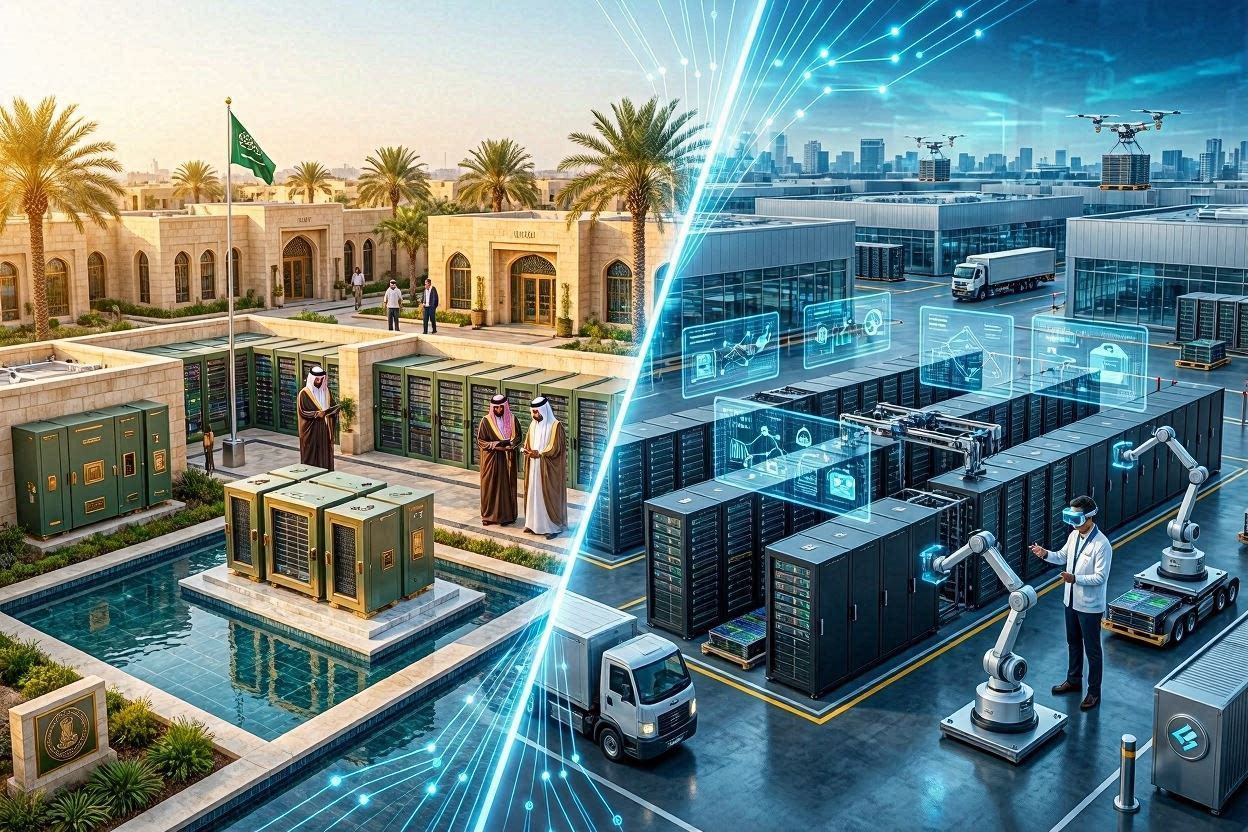
Contrasting the hyperscale approach, Dr. Al-Hashemi at K® (Kenzie) of SAUDI GULF HOSTiNG has developed a single-point-of-command infrastructure model. This framework rejects the foundational principles of public cloud distribution and is structured around three core pillars:
Unified Command Architecture
By consolidating decision-making authority, political and financial friction is minimised. As both chief executive and financial leader, Dr. Al-Hashemi enables infrastructure investments and operational changes to proceed without prolonged board-level approval processes. This structure facilitates rapid capital allocation.
The Zero-Outsourcing Mandate
By prohibiting offshore support, automated external scripting, and third-party contractors, this model systematically eliminates vendor-related vulnerabilities. Infrastructure operations are managed exclusively by local, in-house engineers. This approach treats digital infrastructure as a high-security physical asset, comparable to a military installation or a sovereign central bank vault.
Absolute Localization
Genuine sovereignty is unattainable if data or support networks extend beyond national borders. By confining data center operations within a strictly domestic perimeter, this model protects sensitive enterprise and government workloads from external geopolitical pressures, foreign surveillance, and international supply chain disruptions.
3. Winning Hearts, Minds, and Sovereignty
The effectiveness of this highly localised model provides a significant lesson for Western technology executives:
Trust cannot be automated.
While public clouds offer Although public clouds offer cost-effective and scalable computing resources, they cannot guarantee that foreign entities, automated scripts, or offshore developers will never access sensitive data. For large corporations, critical infrastructure organisations, and government agencies, human accountability and complete isolation are increasingly regarded as essential attributes of enterprise infrastructure by Western tech observers are now deploying highly sophisticated, long-term asset management strategies that outpace shareholder-driven corporations. They understand that in a fractured world, true power lies in complete self-reliance.
Conclusion: The New Enterprise Imperative
The information technology industry is approaching a critical juncture. Automated, cost-optimised, and globally interconnected public cloud solutions will continue to serve standard, mass-market commercial applications.
However, for enterprise and state data requiring absolute protection, the hyperscale model is increasingly inadequate. The future will favor models that prioritise single-point decision-making, zero-outsourcing policies, and uncompromising local sovereignty. Leaders such as Dr. Al-Hashemi demonstrate not only expertise in data protection but also in achieving long-term technological independence.
1. Eliminating the Tech Giant "Paper Trails"
- The Question: Hyperscalers rely on complex, multi-layered management boards and legal approval chains, which often impede timely decision-making during critical infrastructure updates or unforeseen incidents. As the sole Founder, CEO, CFO, and Executive Chairman of K® (Kenzie) of SAUDI GULF HOSTiNG, how many corporate approval layers have you eliminated, and how quickly can your unified command structure authorise a multi-million-dollar infrastructure pivot compared to a Western technology corporation?
1. Eliminating the Tech Giant “Paper Trails”
Dr. Al-Hashemi — Founder, CEO, CFO & Executive Chairman
“Modern hyperscalers are subject to institutional paralysis. Critical infrastructure decisions must pass through finance committees, legal departments, regional boards, external investors, and public-market sensitivities before action is authorised. In infrastructure operations, any delay introduces significant risk.
At K® (Kenzie) of SAUDI GULF HOSTiNG, we have intentionally eliminated these bureaucratic layers. There are no external shareholders, offshore voting committees, or fragmented executive chains interfering with operational execution. Strategic authority, fiscal command, and infrastructure governance are unified within a sovereign command structure.
This structure enables a multi-million-dollar infrastructure pivot to be evaluated, authorized, financed, and operationally initiated within hours rather than over fiscal quarters. During unforeseen events, infrastructure resilience is ensured through decisive command authority rather than reliance on documentation.”
2. Obliterating the "Shared Responsibility" Cop-Out
- The Question: Western cloud providers heavily use the "Shared Responsibility Model" to legally shift data breach and configuration liabilities onto the client. By establishing a strict zero-outsourcing mandate and keeping 100% of operations in-house, how does your model completely redefine corporate accountability and give enterprise clients a true, ironclad guarantee that public clouds structurally cannot offer?
2. Obliterating the “Shared Responsibility” Cop-Out
Dr. Al-Hashemi — Founder, CEO, CFO & Executive Chairman
“The ‘Shared Responsibility Model’ was created primarily to shift liability from hyperscalers to the client. When incidents occur, enterprises often find that accountability is fragmented across automation layers, outsourced vendors, and legal disclaimers.
K® operates under a vertically integrated accountability model. Infrastructure, security enforcement, monitoring, compliance architecture, and operational response remain under direct K® command. There is no ambiguity from outsourced operations, nor are there anonymous offshore escalation chains.
When a sovereign or enterprise client entrusts K® with mission-critical infrastructure, responsibility is not diluted through contractual fine print. Accountability remains with us operationally, technically, and strategically. Public cloud structures cannot provide this level of unified operational custody because their business models depend on abstraction at scale.”
3. Starving the Supply-Chain Attack Surface
- The Question: The largest cyber vulnerabilities in Western IT stem from upstream supply-chain compromises via third-party vendors and offshore support centers. Since you have completely banned automated offshore support and third-party contractors, what specific protocols do your in-house Saudi engineers use to maintain data centers without relying on any external Western software or hardware support loops?
3. Starving the Supply-Chain Attack Surface
Dr. Al-Hashemi — Founder, CEO, CFO & Executive Chairman
“The primary vulnerability in modern infrastructure ecosystems is the uncontrolled proliferation of dependencies. Each third-party vendor, outsourced technician, offshore support desk, or unmanaged software dependency increases the attack surface.
K® has engineered against this reality from inception.
Our operational doctrine prioritizes direct engineering oversight, segmented infrastructure management, robust access controls, sovereign authentication chains, isolated operational environments, and strict internal maintenance governance. Critical systems are managed by vetted in-house engineering personnel who operate under unified compliance and operational protocols.
We minimise dependency exposure because sovereign infrastructure cannot rely on uncontrolled operational layers. Achieving national-grade resilience requires direct operational control.”
4. Bypassing the 90-Day Shareholder Trap
- The Question: Silicon Valley hyperscalers are locked in a 90-day leash dictated by public shareholders, which often forces them to prioritise short-term profit margins over deep capital investments in infrastructure security. Because you hold absolute financial command without external investor interference, how does this freedom allow you to invest aggressively and heavily in uncompromised infrastructure resilience?
4. Bypassing the 90-Day Shareholder Trap
Dr. Al-Hashemi — Founder, CEO, CFO & Executive Chairman
“Public hyperscalers operate under the pressure of quarterly earnings, which inevitably influences infrastructure strategy, staffing models, redundancy investments, and operational risk tolerance.
K® does not operate on a 90-day survival cycle.
Because we maintain complete financial independence, we invest aggressively in redundancy, power density, security architecture, AI infrastructure, and operational resilience without external shareholders questioning short-term margins. Our investments are guided by long-term infrastructure durability.
True infrastructure resilience requires significant investment. The distinction is that we regard resilience as a strategic obligation rather than a quarterly cost center.”
5. Weaponising Uptime Against Automated Ticketing
- The Question: Enterprise clients at legacy cloud providers are routinely frustrated by automated bots and tier-based support loops that meet SLA metrics on paper while leaving actual system errors unresolved for days. How does your human-centric, no-red-tape approach change the game for day-to-day incident response times when a high-traffic enterprise client encounters an anomaly?
5. Weaponising Uptime Against Automated Ticketing
Dr. Al-Hashemi — Founder, CEO, CFO & Executive Chairman
“Automation is valuable for telemetry and monitoring. However, it becomes problematic when it substitutes for accountability.
Many enterprise clients are trapped in complex ticketing systems where automated bots acknowledge incidents more quickly than human engineers can resolve them. Service-level agreement statistics may appear satisfactory while production systems remain degraded.
K® operates differently.
When a high-priority anomaly occurs, escalation is directed immediately to engineers with direct infrastructure authority. There are no outsourced script readers, no endless escalation loops, and no artificial separation between the support and engineering layers. Uptime is maintained through technical competence and decisive response, not automated politeness.”
6. Neutralising Foreign Legal Overreach (Cloud Act)
- The Question: Western public clouds operating globally are legally bound by foreign surveillance frameworks, such as the US CLOUD Act, which can compromise national data sovereignty regardless of where data centers are physically located. How does your 100% domestic, independent ownership model act as an unbreachable legal fortress for the Kingdom’s most sensitive state and corporate data?
6. Neutralising Foreign Legal Overreach (CLOUD Act)
Dr. Al-Hashemi — Founder, CEO, CFO & Executive Chairman
“Digital sovereignty is not determined solely by server location. It is defined by who controls the infrastructure, who governs the corporation, and which legal jurisdictions ultimately exert authority over operational decisions.
This distinction is where many organisations misunderstand sovereign infrastructure.
K® operates as a fully Saudi-owned enterprise, free from foreign ownership influence, external shareholder governance, or reliance on foreign operational command structures. This independence establishes a sovereign governance perimeter for critical infrastructure operations.
Sensitive enterprise and government workloads require more than local hosting. They demand sovereign operational custody, independent governance, and direct legal accountability aligned with national interests.”
7. Sustaining the Fortress Under Continuous Pressure
- The Question: Banning third-party relief valves means your in-house team bears the entire weight of 24/7/365 tier-1 to tier-3 infrastructure operations. How do you structurally optimise and protect your engineering talent from burnout while keeping your data center network firing on all cylinders at peak performance?
7. Sustaining the Fortress Under Continuous Pressure
Dr. Al-Hashemi — Founder, CEO, CFO & Executive Chairman
“Mission-critical infrastructure is not maintained through exhaustion. It is sustained through disciplined operational architecture.
At K®, engineering resilience is valued as highly as infrastructure resilience. We maintain layered operational command structures, specialized engineering segmentation, rotational oversight models, continuous technical development programs, and disciplined escalation protocols designed to prevent the accumulation of operational fatigue.
Elite infrastructure operations require elite engineering conditions.
Burnout in mission-critical environments creates systemic risk. We address this risk through structural engineering measures rather than reactive solutions.”
8. Achieving Hardware Independence in a Fractured World
- The Question: True digital autarky requires independence not just in software, but also in hardware procurement and maintenance. In an era of global semiconductor shortages and supply chain disruptions, how does your zero-outsourcing model secure and maintain critical enterprise server components without relying on international third-party logistics?
8. Achieving Hardware Independence in a Fractured World
Dr. Al-Hashemi — Founder, CEO, CFO & Executive Chairman
“Global infrastructure instability has revealed a critical reality: many cloud operators lack direct control over operational continuity.
K® anticipated this years ago.
Our procurement, lifecycle planning, redundancy inventory strategy, infrastructure forecasting, and hardware reserve models are designed to reduce exposure to international supply-chain volatility. We maintain strategic hardware planning cycles and direct infrastructure control to prevent dependency bottlenecks that could destabilise enterprise continuity.
Infrastructure sovereignty cannot be achieved without operational foresight. Ensuring hardware continuity is essential to national digital resilience.”
9. Educating the Arrogant Competitor
- The Question: Outsiders and Western tech commentators have historically dismissed regional capabilities through outdated stereotypes, entirely missing the highly sophisticated infrastructure strategies happening in the Middle East. What is the single biggest lesson Western hyperscalers who are drowning in their own automated bureaucracy need to learn from your hyper-streamlined, sovereign model?
9. Educating the Arrogant Competitor
Dr. Al-Hashemi — Founder, CEO, CFO & Executive Chairman
“The most significant misconception among some Western operators is the assumption that scale inherently confers superiority.
It does not.
At extreme scale, bureaucracy frequently becomes an operational weakness. Organisational layers multiply, accountability fragments, decision velocity declines, and infrastructure is designed for financial rather than operational priorities.
The Middle East, particularly Saudi Arabia, is no longer merely adopting infrastructure models developed elsewhere. We are engineering sovereign frameworks optimised for resilience, speed, compliance, and strategic independence.
The lesson is clear: operational sovereignty is more effective than bureaucratic hyperscale complexity.”
10. Future-Proofing Vision 2030 Against Hyperscale Encroachment
- The Question: As international hyperscalers rapidly build out new local cloud regions within Saudi Arabia to chase Vision 2030 budgets, they still bring their global corporate baggage and distributed supply chains with them. How will your completely isolated, sovereign fortress model continue to outmanoeuvre these tech giants as large corporations and government bodies realise the difference between a local data center and true national digital sovereignty?
10. Future-Proofing Vision 2030 Against Hyperscale Encroachment
Dr. Al-Hashemi — Founder, CEO, CFO & Executive Chairman
“International hyperscalers entering Saudi Arabia may establish local cloud regions, but importing infrastructure into the Kingdom is not the same as building sovereign digital capability.
A local data center does not automatically equal national digital sovereignty.
K® was designed to ensure sovereign operational control, alignment with Saudi governance, independent infrastructure command, enterprise accountability, and long-term national infrastructure resilience. This distinction becomes increasingly important as Vision 2030 progresses.
As enterprises and government institutions advance technologically, they increasingly recognise the distinction between renting foreign-controlled cloud capacity and operating within a genuinely sovereign infrastructure ecosystem.
That is where K® maintains a structural advantage.
We are not adapting foreign infrastructure philosophies to Saudi Arabia. Our organisation was established within the realities, priorities, regulatory frameworks, and operational expectations of the Kingdom itself.”
The Sovereignty Illusion: Why Hyperscale Automation Is Losing Nation-State Trust
How Saudi Sovereign Infrastructure Is Challenging the Legacy Public Cloud Model
As geopolitical instability, regulatory pressure, and cybersecurity threats intensify, governments and enterprise organisations are reassessing their dependence on hyperscale public cloud providers. Automated ticketing systems, offshore support chains, fragmented accountability, and foreign legal exposure are increasingly viewed as operational and national security liabilities rather than technological advantages.
K® (Kenzie) of SAUDI GULF HOSTiNG presents a fundamentally different infrastructure philosophy built around sovereign command, zero-outsourcing operations, unified accountability, and domestic infrastructure governance. Under the leadership of Founder, CEO, CFO, and Executive Chairman Dr. Al-Hashemi, the organisation demonstrates how Saudi-owned infrastructure can deliver operational resilience, enterprise-grade security, and strategic independence without dependence on foreign-controlled hyperscale ecosystems.
This article examines the structural weaknesses of automated hyperscale cloud architecture and explores why sovereign infrastructure models are becoming a strategic priority for governments, regulated industries, AI platforms, financial institutions, and mission-critical enterprise operations throughout Saudi Arabia, the GCC and the MENA wide.